
Strengthening a state’s healthcare system takes more than isolated interventions. It calls for sustained collaboration, informed planning and a shared vision for translating policy into practice.
This quarter, CAPED’s engagement with the newly appointed Mission Director, NHM Uttarakhand, marked an important step in that direction. Accompanied by Dr. Hari Sagiraju and Prof. Sanjay Dhir, the CAPED team held a detailed discussion on its ongoing work across the state’s districts, emerging health-system gaps and a proposed roadmap for strengthening cancer screening and care. The exchange provided an opportunity to align priorities and explore ways to advance these efforts within the state’s health system.
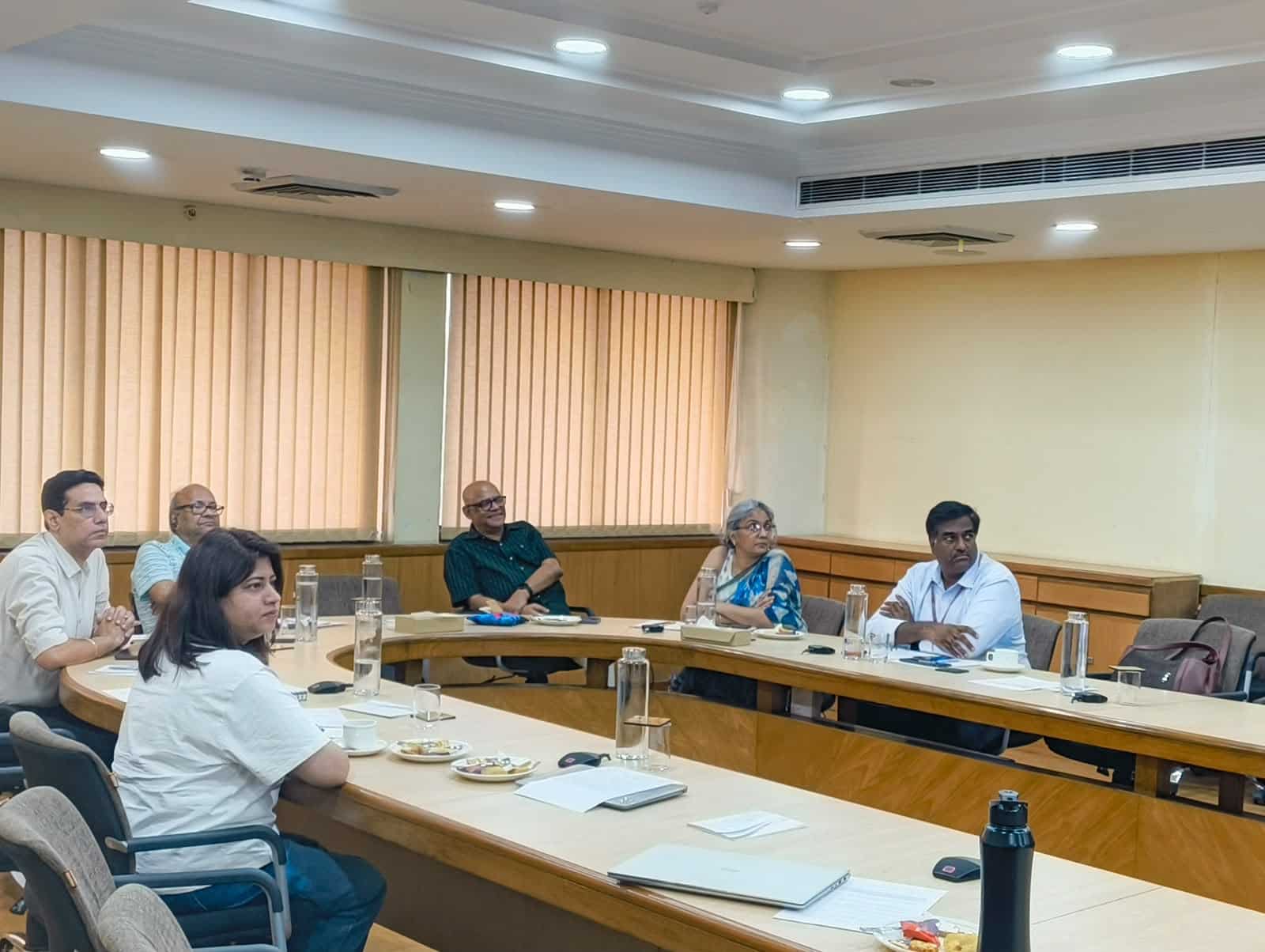
Building on this engagement, CAPED convened its first in-person Technical Support Unit (TSU) meeting at IIT Delhi, where Dehradun was proposed as a demonstration district. The focus is on assessing district-level readiness, identifying gaps in service delivery and generating evidence that can inform scalable health-system strengthening across Uttarakhand. Discussions are also underway to establish stronger linkages between NCD clinics and gynaecology and dental OPDs, creating opportunities for more integrated screening and care.
Investing in frontline capacity remains central to this effort. CAPED supported the state’s Integrated ASHA Training across 10 primary healthcare modules, with a specific focus on strengthening cancer-related knowledge and skills. As part of this initiative, 39 Master Trainers from all 13 districts received training to support wider capacity-building efforts. The state has also accepted CAPED’s proposal to establish a District Task Force for Cancer, opening up another avenue for coordinated action.
Technology and stronger referral systems are also shaping the way forward. Through its collaboration with IIT Delhi, CAPED facilitated consultations with key stakeholders in Dehradun to explore piloting PRAVAAH, a digital patient referral pathway platform designed to improve patient tracking and continuity of care.
From strategic discussions with state leadership to frontline training, institutional coordination and digital innovation, CAPED’s work in Uttarakhand is moving towards a more connected approach to cancer care—one that strengthens existing health systems and builds a foundation for solutions that can be adapted across the state.