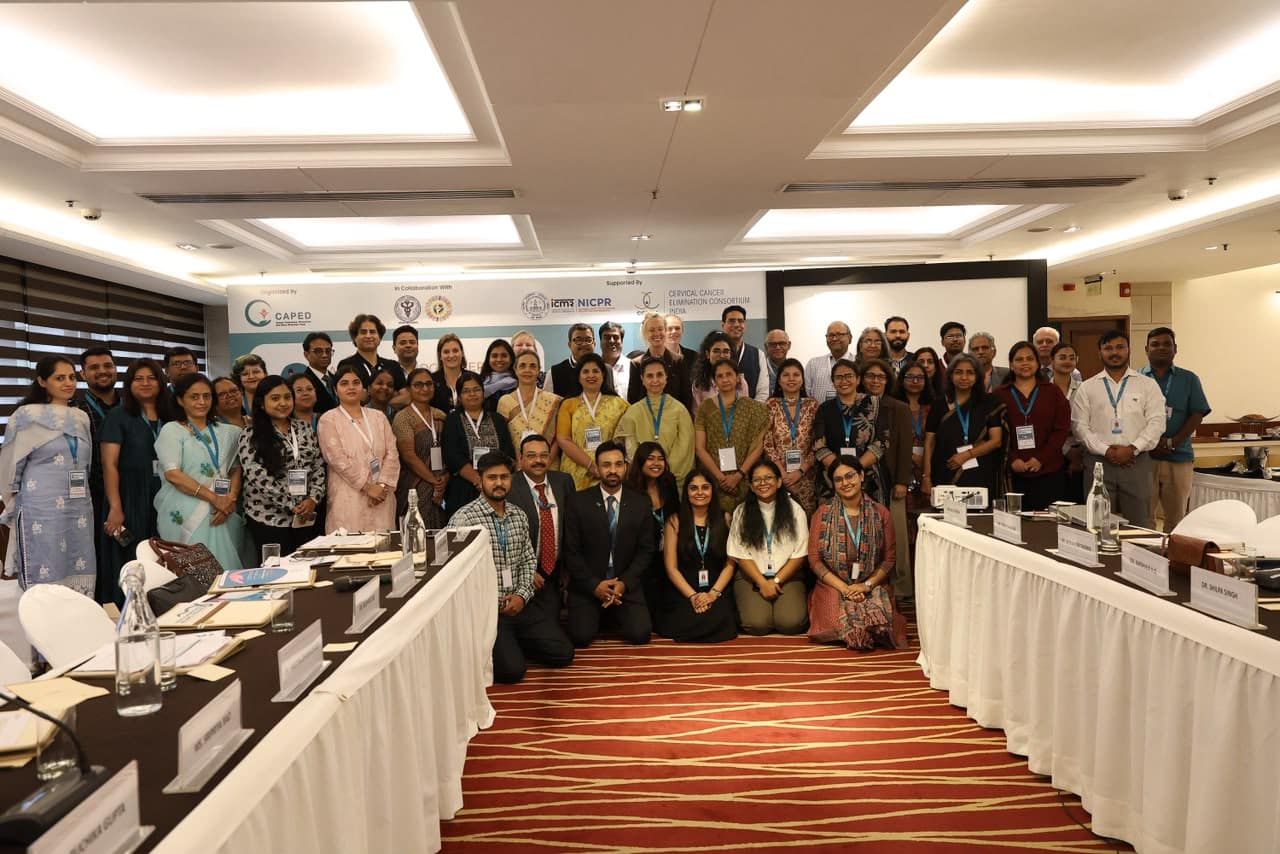
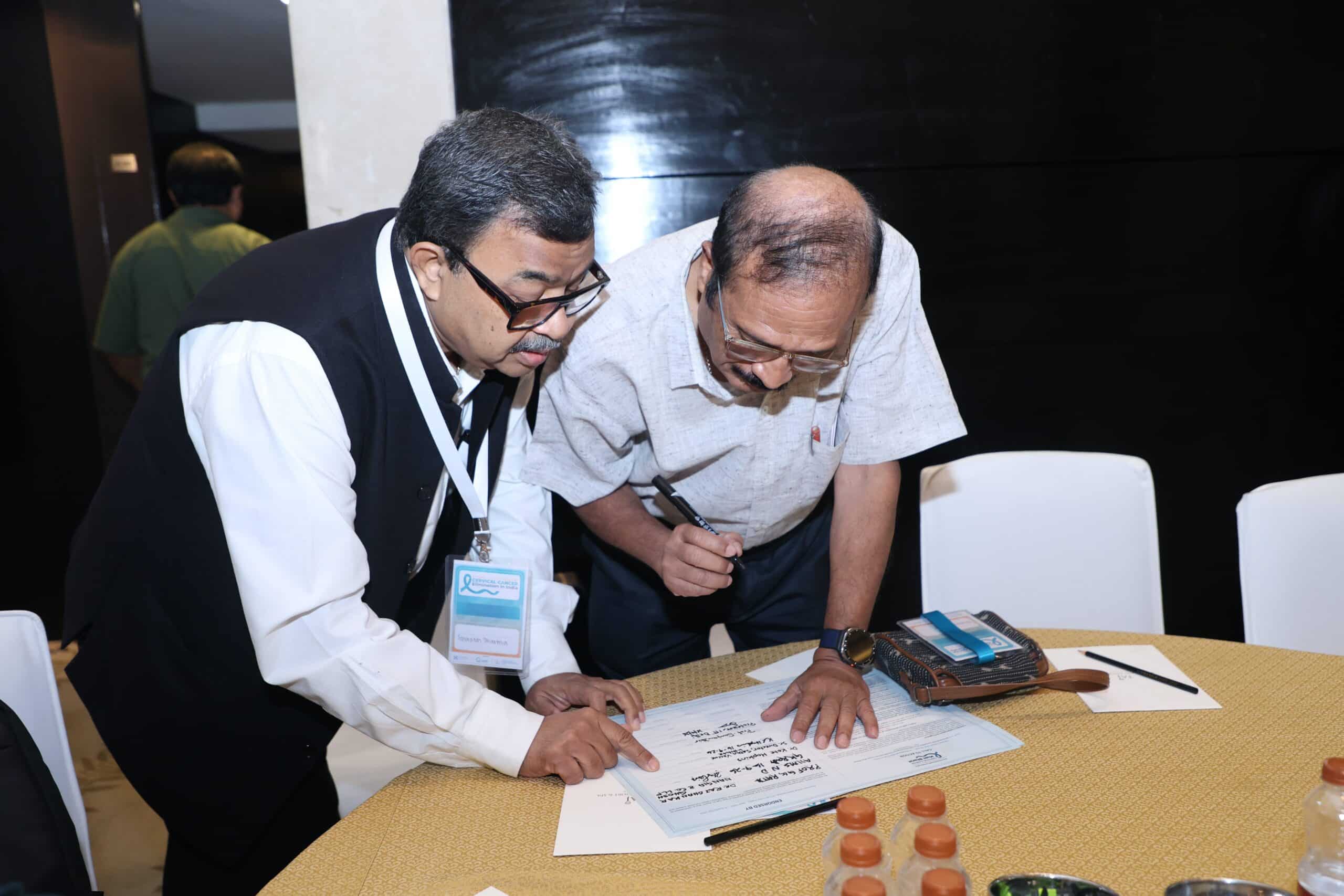
 The second day shifted the focus towards a collective Call to Action, bringing policy, implementation and partnership opportunities to the forefront. Dr. Saurabh Sharma outlined CCEC-I’s vision for a measurable, shared commitment across prevention, screening, diagnosis, treatment and follow-up. Dr. Rebecca Martin, President, Sabin Vaccine Institute, emphasised political commitment, strong health systems and community engagement as essential drivers of progress. Ms. Mridu Gupta also introduced CAPED’s Women for Women Collective, a broader initiative focused on women’s health, agency and well-being.
Discussions moderated by Dr. K. Madan Gopal, Dr. Naveen Thacker, Prof. Dr. Nandini Sharma, Dr. Pradeep Haldar and Dr. M.K. Agarwal brought together diverse perspectives on implementing the WHO’s 90-70-90 targets. Contributors including Dr. Rajshree Das, Dr. Alexander Thomas, Prof. Sanjay Dhir, Dr. Amrita, Dr. Vivek Virendra Singh, Dr. Neelam Mohan, Dr. Hari Krishna Raju Sagiraju and Dr. Shalini Singh examined the importance of sustained financing, HPV vaccination, accessible screening, timely treatment and stronger coordination between public and private healthcare systems.
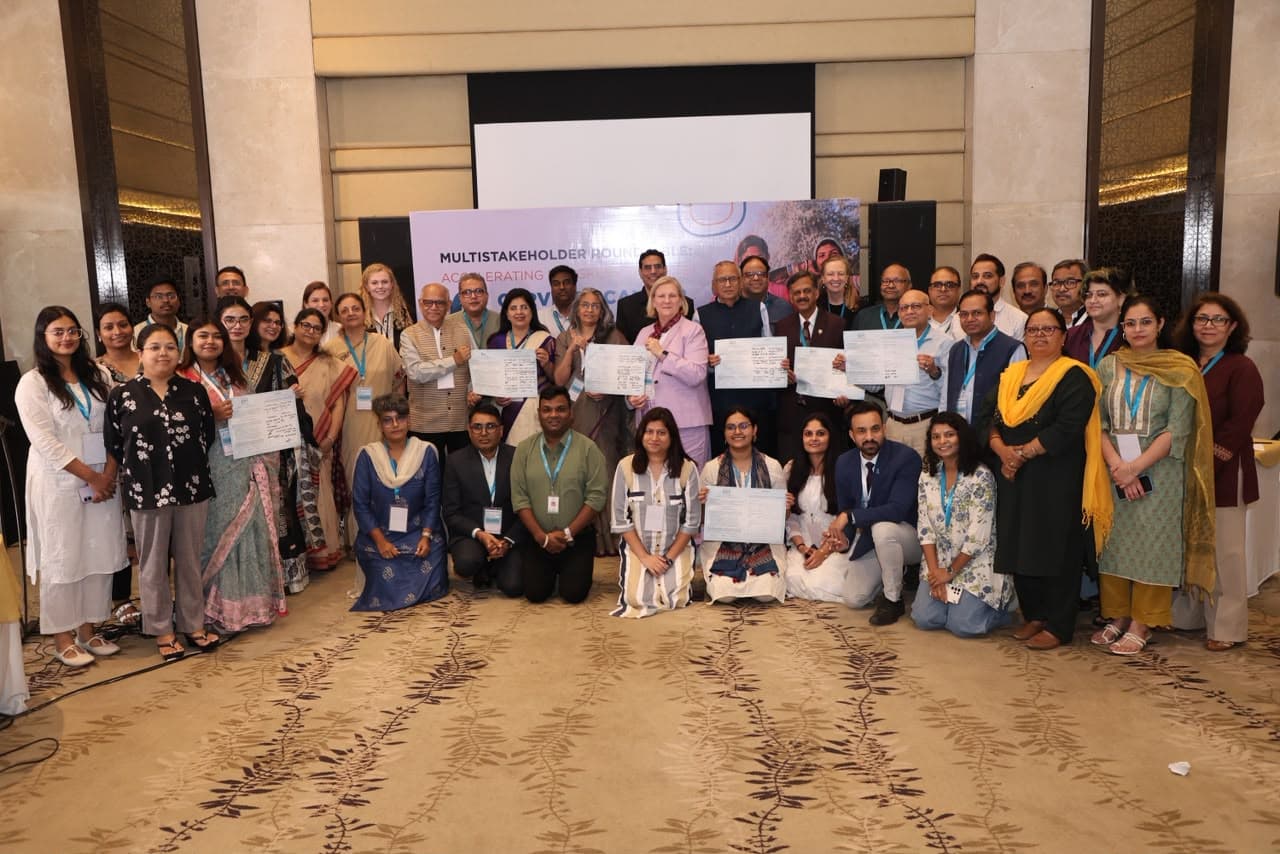 The dialogue also highlighted the value of learning across states and building trust within communities. Prof. Neerja Bhatla, Ms. Meenu Anand, Prof. Karen Canfell and Dr. Partha Basu shared insights on locally adapted screening strategies, teacher-led HPV vaccination awareness, implementation research and stronger connections between vaccination and screening. Dr. Anant Bhan of Sangath added an important perspective on health equity, calling attention to structural barriers and the need for community-led solutions that build trust among vulnerable populations.
Across both days, a common message emerged: cervical cancer elimination requires more than medical interventions. It calls for accessible HPV testing, effective vaccination programmes, trained healthcare personnel, reliable referral and follow-up systems, sustained investment and strong collaboration across sectors. Equally important is the need to adapt solutions to the realities of individual states and communities.
The National Dialogue marked an important step towards aligning evidence, policy and implementation priorities. By bringing together diverse expertise and fostering a shared sense of responsibility, the conversations laid the groundwork for a more coordinated and actionable pathway.
The conversations and key messages from the National Dialogue reached far beyond the event venue, securing 170 media placements across national, regional, digital and international platforms. Prominent media outlets such as ANI, The Tribune, Outlook Business, NewsX, India News and Ahmedabad Mirror, alongside several other publications, helped amplify the dialogue’s message.
The coverage extended across India, reaching audiences in Maharashtra, Gujarat, Haryana, Rajasthan, Uttar Pradesh, Bihar, Odisha, Punjab, Karnataka, Andhra Pradesh, West Bengal, Madhya Pradesh, Chhattisgarh, Tamil Nadu and the North-East. The dialogue also gained international visibility, with media placements across the United States, United Kingdom, Canada, Europe and the UAE, among other markets.
This wide-ranging coverage helped carry the conversation on cervical cancer elimination to a broader audience, extending its reach beyond the stakeholders in the room and bringing greater visibility to the collective effort towards a cervical cancer-free India.