
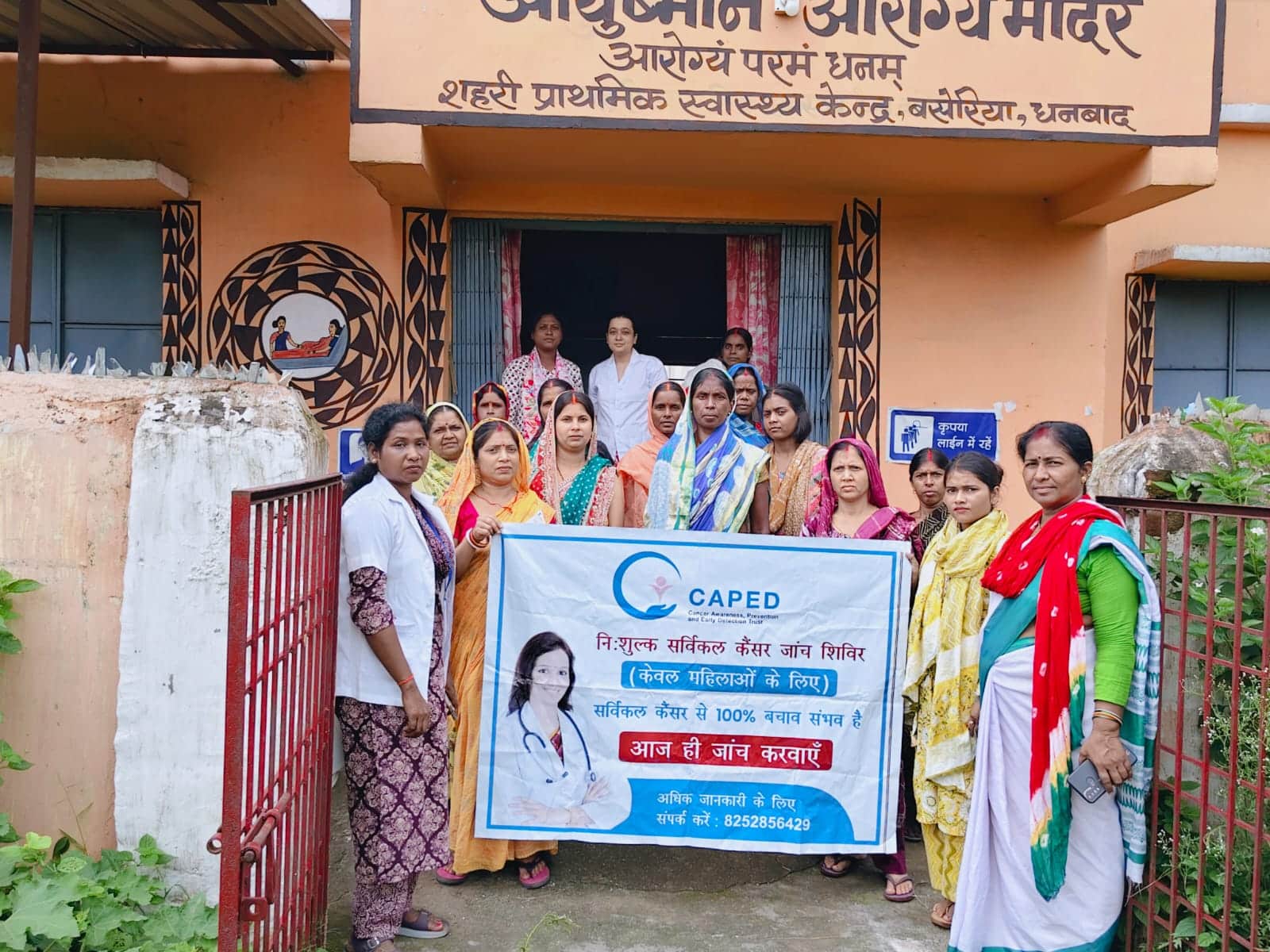
In Jharkhand, CAPED under Health System Strengthening (HSS) is working with health teams at different levels to make cancer screening and care more accessible. Gap assessments across 125 Ayushman Arogya Mandirs (AAMs) in five districts looked at equipment, supplies, staff availability and the capacity of Community Health Officers. Following these assessments, 68 AAMs are now fully functional and ready to deliver services.
At the district level, CAPED has proposed a District Task Force for Cancer to support monitoring, supervision and coordination. District leaders have been oriented on the proposed framework to help strengthen ownership of cancer-related activities.
The focus also extends beyond screening. CAPED is supporting Day Care Centres for Cancer (DCCCs) to take on the management of precancerous conditions alongside chemotherapy, helping bridge the gap between early detection and care. The DCCC in Sahibganj is strengthened and ready for rollout, while work is progressing in Giridih and Jamtara.
CAPED is also supporting the state to build screening capacity. At a State-level Training of Trainers workshop organised by the State NCD Cell and chaired by the Managing Director, NHM, Medical Officers from all 24 districts received training on population-based and opportunistic screening under the National NCD Programme. CAPED supported the facilitation and technical sessions alongside WHO and Tata.
One session focused on HPV DNA-based cervical cancer screening, introducing participants to CAPED’s ongoing work in Jharkhand. The team explained how the hub-and-spoke model works, including sample referral and testing, and how patient navigation can help women receive timely follow-up and appropriate care.
As part of an ongoing study, CAPED is working with the Government of Jharkhand, Asarfi Hospital, ICMR-NICPR and Becton Dickinson (BD) to strengthen HPV-DNA screening in Dhanbad. With a target of reaching 8,000 women, the study has collected 3,191 samples so far, bringing more women within reach of cervical cancer screening.
Together, these efforts are helping strengthen the links between primary care, district-level coordination, screening and treatment, so that women are better supported at every step.